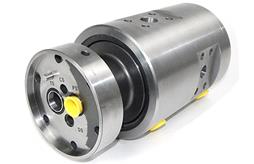
Fibre Optic Rotary Joints: Complete Guide
In today’s fast-paced digital world, the demand for reliable data transmission in tough environments has never been higher. Fibre optic rotary joints (FORJs) are essential in enabling uninterrupted data transfer between rotating and stationary components, ensuring smooth communication without signal loss. This article explores what a fibre optic rotary joint is, how it works, the different types available, and where they are commonly used.
What is a Fibre Optic Rotary Joint?
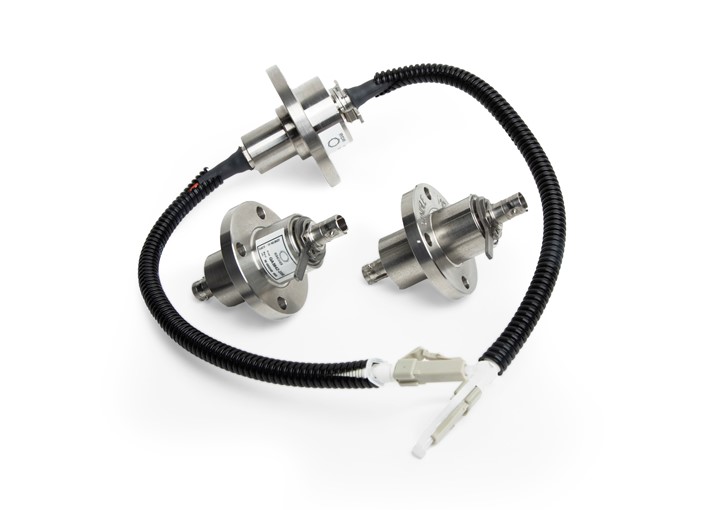
A fibre optic rotary joint is a device that allows the transmission of data across a rotating interface. This is especially useful in systems that require rotation while maintaining a constant data connection—such as radar systems and medical imaging equipment.
How Do Fibre Optic Rotary Joints Work?
FORJs operate by guiding light signals in and out of microscopic optical fibres, which are coupled across a rotating interface. As the joint rotates, lenses or prisms within the assembly align the optical paths to ensure accurate transmission. Maintaining this precise alignment is critical to avoid signal loss, distortion, or attenuation. Achieving this demands high-precision design, skilled assembly, and strict quality control.
Types of Fibre Optic Rotary Joints
With various connector types, fibre formats, and environmental demands, there are several FORJ configurations to suit different needs. BGB offers the following:
Single-Channel FORJs
Built from stainless steel and compatible with all major fibre types, single-channel FORJs are ideal for converting electrical signals—such as Ethernet—into optical signals for transfer between moving and stationary components. Downloadable datasheets are available for technical specifications.
Multi-Channel FORJs
These perform the same function as single-channel FORJs but allow for multiple parallel data channels. They’re particularly useful where separate LANs are required for data security or where redundancy is critical for uninterrupted service.
Typical Applications of FORJs
Wind Turbines
Used to transmit data from the rotating blades to the stationary systems, FORJs are also vital in other renewable energy systems like tidal and nuclear turbines.
Drones, ROVs, and Robotics
FORJs are essential in tethered drones, robotic arms, and remotely operated vehicles, transmitting high-bandwidth video and data back through rotating cable systems or reels. They ensure a reliable connection for critical operations such as inspections and surveillance.
Radar Systems
In radar applications, FORJs transmit large volumes of real-time data across 360° rotations. They are crucial in defence, air traffic control, and maritime search and rescue, where consistent and secure data flow is a priority.
Key Benefits of Fibre Optic Rotary Joints
-
High-Speed Data Transmission – Capable of handling large amounts of data quickly, without the interference associated with electrical systems
-
Enhanced Security – Fibre connections cannot be tapped into without physically damaging the cable, offering better security than wireless alternatives
-
Continuous Rotation – Allows full 360° rotation without interrupting signal integrity
-
Low Signal Loss – Superior to copper cabling in maintaining data strength over distance
-
Compact and Lightweight – Ideal for applications with space or weight restrictions, such as aerospace and medical devices
-
Electromagnetic Interference Resistance – Immune to EMI, making them ideal in environments with high electrical noise
BGB FORJ Solutions
BGB offers a wide range of FORJ products, which can be integrated into bespoke slip ring assemblies to meet specific industry needs. Whether you’re looking for a standalone solution or a tailored system, BGB’s FORJs ensure reliable, high-performance data transmission where it matters most.
Visit the BGB website for more information on Fibre Optic Rotary Joints: Complete Guide
ENQUIRY FORM