The Future of Industrial Fibre Optics: From Sensing to Power Over Fibre
Fibre optic technology is no longer limited to broadband and data centres.
While it has long been used to deliver high-speed data in industrial environments, fibre optics are now developing into something far more versatile.
From structural sensing to power over fibre, these emerging capabilities are set to transform how industries monitor, maintain and power critical assets, particularly in remote or harsh environments.
In this article, we explore how fibre optics are expanding beyond data transmission and what this could mean for future industrial applications.
Fibre optics beyond data transmission
Traditionally, fibre optics have been valued for their ability to transmit large volumes of data quickly and reliably.
Today, they are being used in much more innovative ways, including monitoring structural health in real time, measuring temperature, strain and environmental conditions, enabling remote sensing in hard-to-reach locations and supporting new methods of remote power delivery.
These developments are particularly important as industrial assets such as wind turbines, offshore platforms and radar systems become larger, more complex and more remote.
Fibre optic sensing: smarter asset monitoring
One of the most established applications of fibre optics in industry is Fibre Bragg Grating sensing.
FBG sensors can be embedded directly into materials such as turbine blades or structural components.
This allows operators to monitor strain and mechanical stress, temperature changes, and exposure to chemicals or saline environments.
Why it matters
Unlike traditional sensors, fibre optic sensors are non-conductive, making them ideal for lightning-prone environments.
They are also highly durable, even in harsh conditions such as offshore or mining applications.
They can also be multiplexed, meaning multiple sensors can operate along a single fibre.
This makes them particularly valuable for large rotating assets such as wind or tidal turbines, where understanding structural fatigue is important for reducing maintenance costs and preventing failure.
What is power over fibre?
Power over fibre is one of the most exciting emerging trends in fibre optic technology.
Put simply, PoF allows optical fibres to transmit power as light, which is then converted into electrical energy at the receiving end.
How does it compare with Power over Ethernet?
Power over Ethernet typically works over distances of up to 100 metres.
Power over fibre can transmit power over kilometres.
This makes PoF ideal for applications where traditional electrical cabling is not practical or safe.
The benefits of power over fibre
Power over fibre opens up new possibilities for powering devices in remote or challenging environments.
Key advantages include long-distance power transmission, no electrical conductivity, which can improve safety in explosive or high-voltage areas, reduced infrastructure because power and data can be combined within a single fibre, and lower maintenance requirements with fewer on-site electronics.
In some configurations, such as double-clad fibre, it is even possible to transmit data through the fibre core while delivering power through the outer cladding.
This means a single compact cable can handle both communication and energy delivery.
Real-world applications of power over fibre
Although still developing, power over fibre has strong potential across several industries.
Remote sensing and monitoring
Low-power sensors can be deployed miles away from their control systems, reducing the need for local power sources.
Security and surveillance
PoF could support distributed detection systems for threats such as drones, particularly in remote or high-risk areas.
Offshore and renewable energy
Wind, tidal and offshore assets could benefit from reduced cabling complexity and improved reliability.
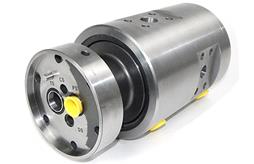
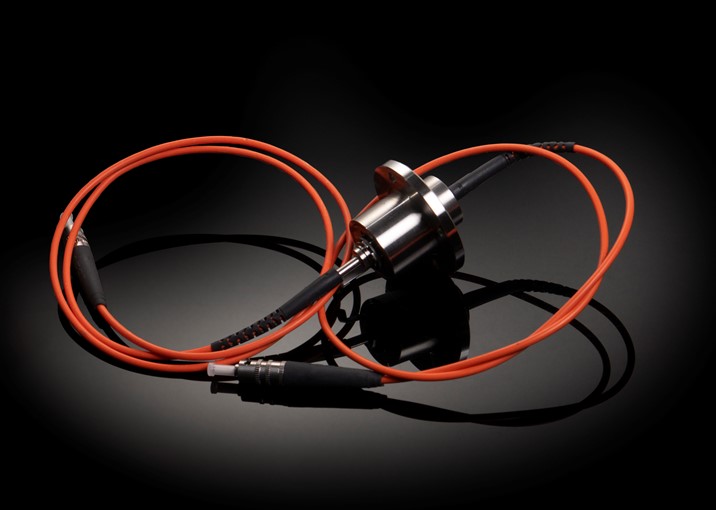
The role of Fibre Optic Rotary Joints
As fibre optic capabilities expand, components such as Fibre Optic Rotary Joints become increasingly important.
FORJs enable optical signals to pass between stationary and rotating parts of machinery with minimal loss.
They are already widely used in applications such as radar systems, wind turbines and industrial automation.
Enabling next-generation systems
When combined with fibre optic sensing and power over fibre, FORJs could support real-time monitoring of rotating structures, remote-powered sensors on moving components and future concepts such as rotating LiDAR or 360-degree sensing systems.
Challenges to overcome
Despite the potential, both fibre sensing and power over fibre still face practical limitations.
Fibre optic sensing challenges
Fibre optic sensing requires temperature compensation for accurate readings.
Fully distributed, low-cost sensing over long distances is also still developing.
Power over fibre challenges
Higher power levels can create heat at connectors.
Local electronics are still required to convert light into electricity.
The cost versus benefit also needs to be carefully assessed against simpler alternatives.
In many cases, traditional electronics may still be the more practical solution, at least in the short term.
What is next for industrial fibre optics?
Fibre optic sensing is already a proven technology and continues to gain traction across industries.
Power over fibre, meanwhile, is moving from research into early-stage real-world applications.
While it is not yet mainstream, its ability to deliver power safely over long distances makes it a compelling option for the future.
As industrial systems become more connected, remote and data-driven, fibre optics are likely to play an increasingly central role, not only in communication, but also in how we power and understand the world around us.
Final thoughts
The evolution of fibre optics is opening up new possibilities for industrial innovation.
From smarter sensing to remote power delivery, technologies such as power over fibre are set to reshape how critical infrastructure is designed and maintained.
For businesses operating in demanding environments, staying ahead of these developments could provide significant advantages in performance, safety and cost efficiency.
Visit the BGB website for more information on The Future of Industrial Fibre Optics: From Sensing to Power Over Fibre
ENQUIRY FORM